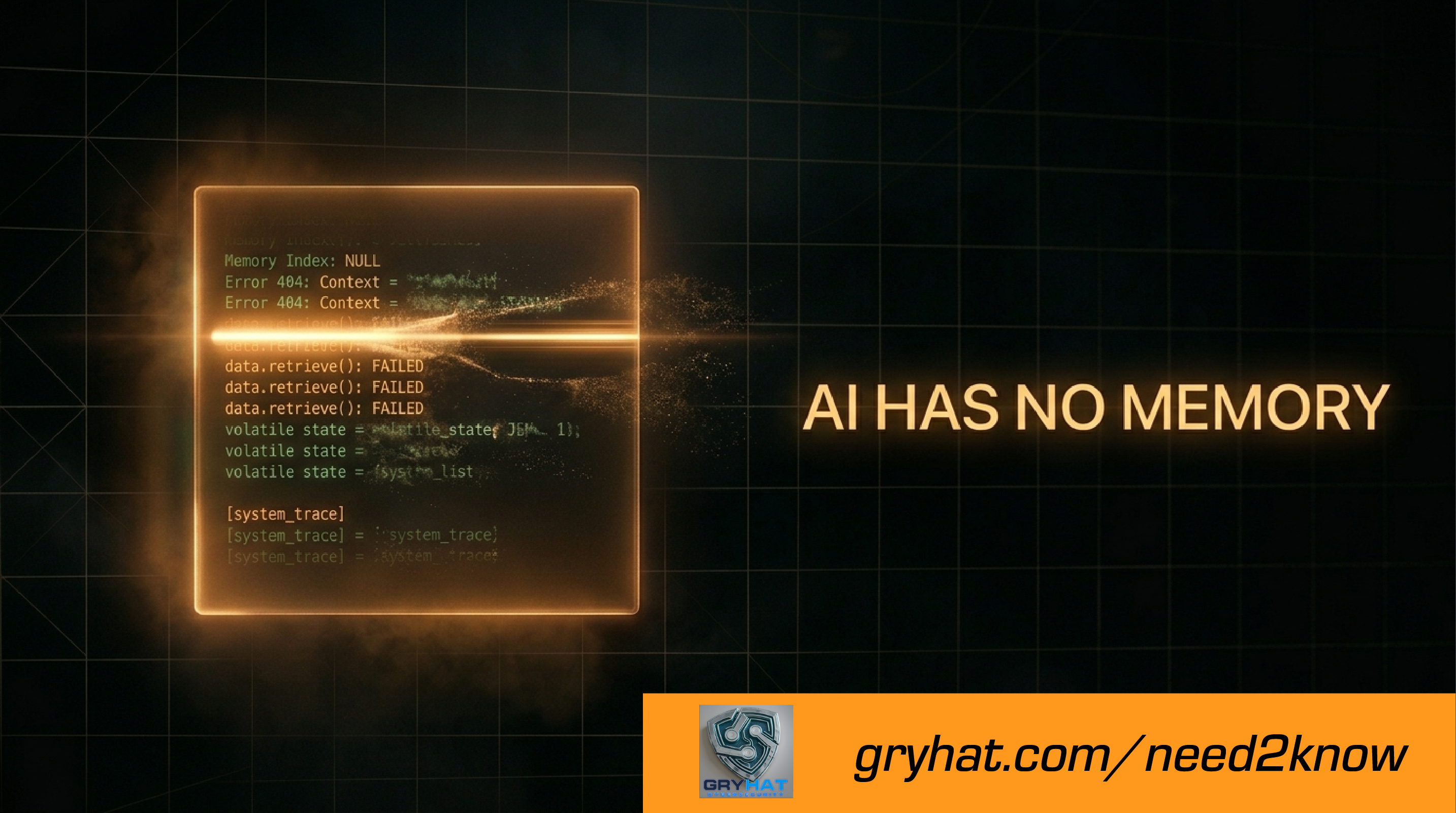

Trillion-dollar infrastructure. The smartest systems ever built. And every time you open a new chat — it’s like meeting a stranger. Here’s why. And here’s how to fix it today.
—
Last week I wrote about lying to your AI — how feeding bad information into these systems, or letting wrong answers slide uncorrected, compounds into something worse than a single mistake. A lot of you responded. Most said some version of the same thing: *I didn’t realize I was doing that.*
This week I want to go one level deeper. Because before we can talk about the quality of what goes into these systems, we need to talk about the fact that most of what goes in — doesn’t stay.
—
All these trillion-dollar data centers. Servers the size of city blocks. The smartest computers ever built by human hands.
And yet — every single time you open a new chat, it’s like meeting a stranger.
We solved self-driving cars. We beat world champions at chess. We can generate a photo of anything you can imagine in four seconds flat.
But memory? Still working on it.
This isn’t a cynical take. I use these tools every single day and I believe in them. But part of believing in something is being honest about what it can’t do yet. And right now, AI can’t remember you. Not between sessions. Not without help.
Here’s why — and more importantly, here’s how to work around it today.
—
The whiteboard problem
Every AI conversation you have happens inside what’s called a context window. Think of it as a whiteboard.
The whiteboard is extraordinary. Within a session, it tracks everything — what you’ve said, what you’ve established, the corrections you’ve made, the context you’ve built. It can hold tens of thousands of words and work with all of it simultaneously.
But the second the session ends, someone erases it.
The next time you open a conversation, the AI has no idea who you are. It doesn’t remember your business. It doesn’t remember the three hours you spent last Tuesday getting it calibrated exactly right. It doesn’t remember the correction you gave it, the way you like things structured, or the client context you carefully walked it through.
It wakes up a stranger. Every time.
This is not a bug they forgot to fix. It’s not a feature coming in the next update. It’s an architectural reality of how these systems are built right now. The context window is not persistent memory. It never was.
So if you’ve ever felt like you’re going in circles with your AI — re-explaining the same things, getting inconsistent outputs, watching it drift away from the voice or style you spent time building — now you know why. And here’s the important part: it’s not the AI being difficult. It genuinely doesn’t know. You haven’t told it yet. This session.
—
Push back when it happens
Before we get to the fix, there’s something worth knowing about what to do in the moment.
If a conversation starts feeling repetitive — if the answers stop making sense, if you keep explaining the same thing and the AI keeps getting it wrong — don’t just keep prompting and hoping it self-corrects. It won’t. The context window is getting crowded and earlier instructions are getting pushed out. The AI doesn’t know it’s lost. It will confidently spin in the same direction until you redirect it.
The fix is simple but it takes nerve: call it out. Say “we’re going in circles — let me restate what I need.” Or start a fresh session with a clear briefing.
This is still the honesty principle from last week — just the other direction. Don’t lie to your AI. And don’t let your AI keep lying to you by going along with a broken thread just because you haven’t called it out.
—
The practical fix: how to give your AI memory today
Here’s what every serious team running AI agents has figured out — and what most businesses using AI casually haven’t discovered yet.
You build a briefing file.
It’s exactly what it sounds like. A plain text document that tells your AI everything it needs to know before the session starts. You load it at the beginning of every conversation and your AI picks up exactly where you left off — every time.
It takes about ten minutes to build the first version. It will save you hours.
What to put in your briefing file:
*Your business context*
Who you are, what you do, who your customers are, what problems you solve. Two or three paragraphs. Plain language. Don’t over-engineer it — write it the way you’d explain your business to a smart friend who’s never heard of you.
*Your voice and tone*
How you communicate. Formal or casual? Technical or plain English? Are there phrases you use all the time? Words you hate? Things you never say? Write them down. Your AI will use them.
*Current priorities*
What are you working on right now? What projects are active? What decisions are you trying to make? This is the part that changes week to week — update it when things shift.
*Rules and guardrails*
Things the AI should always do. Things it should never do. Clients it knows about. People it works with. Anything that would take time to re-explain if the AI forgot it.
*How to use it*
Open a new chat. Paste your briefing file. Say: “Read this before we do anything else. This is your context for our session.” Then work normally.
That’s it. Your AI now knows who you are, what you’re doing, and how you operate — for this session. Tomorrow, load it again. Same result.
—
Why context is the new skill nobody’s teaching
Here’s the thing most people miss. The AI tools are getting more powerful every month. Models are getting smarter. Features are being added. But the teams getting the most out of AI right now aren’t the ones with access to the best models.
They’re the ones who’ve figured out how to give those models context.
Context is the new skill. And almost nobody is teaching it.
When you load a briefing file, you’re not just saving time — you’re fundamentally changing the quality of what the AI can do for you. A well-briefed AI isn’t just faster. It’s more accurate, more consistent, more useful, and less likely to drift into outputs that sound right but miss the point.
The people who get this first — who build their briefing systems now, who treat AI context as a skill worth developing — are going to have a compounding advantage over everyone else who’s still re-explaining themselves every single session.
That’s not hype. It’s just arithmetic. Better inputs, better outputs, every time.
—
Where this is all going
The memory problem is being worked on. Native persistent memory is coming — some models already have early versions of it. The tools for long-term agent memory are improving faster than most people realize.
But we’re not there yet. Right now we’re in what I’ve started calling the duct tape era — a moment where the intelligence is extraordinary and the infrastructure around it is still catching up.
The briefing file is duct tape. Good duct tape. Duct tape that works. But it’s a workaround, not a solution.
Build it anyway. Use it now. And stay ready to migrate to something better when it arrives — because it’s coming.
Next week: what it actually costs to run AI agents in a real business. Not token costs. The half-days rebuilding what should have been saved. The drift nobody warns you about. The architecture work that doesn’t show up in any vendor’s sales deck.
Until then —
**Andy V**
Founder, GRYHAT Cybersecurity / YouFeelingLucky.com
—

*Andy Vaca is a 27-year Information systems veteran, vCISO, and founder of GRYHAT Cybersecurity LLC and YouFeelingLucky.com. Based in Orange County, California. He runs Friday night AI education sessions open to the public under the “Andy the AI Guy” brand.*
*Questions, pushback, or stories from the trenches: eva@gryhat.com*